In the District of Delaware, Daubert motions (i.e., motions to exclude expert testimony under FRE 702) are normally due at the same time as case dispositive motions, and often share a page limit.
This makes a lot of sense, since Daubert motions are often more or less dispositive of central substantive issues in the case. Sometimes, if the party cannot present expert testimony on a particular substantive issue, they essentially just lose (although for other things, not so much).
Often, parties will present their primary Daubert issues at the deadline, only to realize later on that there are other lingering issues that fit the Rule 702 case law. …
How many attorneys would have made the choice to re-assert § 101 at trial after conclusively losing on that issue at the MTD stage? Not many, I'm guessing.Oliver Roos, Unsplash
I still remember when, as a first-year associate (circa 2009), a senior attorney explained to me that courts will not hold a patent "valid," and instead will normally only say that it is "not invalid." It seemed like a bit of a silly distinction at the time, but it actually makes perfect sense, and it has come up again and again in my practice since then.
Courts do not typically hold that a patent is "valid" because that would suggest it is impervious to future challenges. Instead, courts often hold that a patent is "not invalid," i.e., that the moving party in a case before the Court failed to show that the patent was invalid due to some circumstance. That language recognizes that another party on another day might yet prove the opposite: that the patent is invalid.
This came up recently in Laboratory Corporation of America Holdings v. Natera, Inc., C.A. No. 21-669-GBW (D. Del.). In that case, the defendant had originally brought a motion to dismiss on § 101 grounds, and Judge Stark denied it. Id., D.I. 28 at 7.
Now, almost four years later and in the lead-up to trial, the plaintiff moved in limine to preclude the defendant from re-raising its failed § 101 argument:
Plaintiff "seeks to preclude Natera from presenting argument or evidence regarding patent eligibility of the Asserted Patents under § 101." . . . Plaintiff contends that such preclusion is warranted because (purportedly) "[t]he Court has already spoken on patent eligibility and has ruled that the Asserted Patents are directed to eligible subject matter."
Id., D.I. 325 at 4.
The Court denied the motion, and will permit the defendant to re-raise its § 101 argument at trial. The Court offered ...
One motion, two motion, three motion, fourAI-Generated, displayed with permission
Hello again dear friends and readers. In the time the blog has been on hiatus I have built a fence 20 feet high and 20 feet long, gained 400 ELO in chess, and seen many old friends for the first time in ages. But the blog is back, and those days are behind me as I feed more content into its insatiable maw. So let's get right into today's case.
You'll all be aware that a couple of our judges require litigants to rank their summary judgment motions. For instance, and relevant to today's case. Judge Williams' form scheduling order states that "The Court will review the party’s summary …
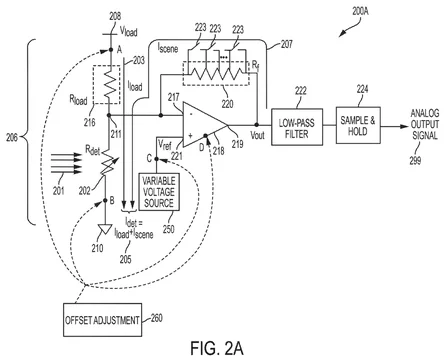
Figure 2A -- the figure at issue.U.S. Patent No. 11,012,647
This is an issue I don't recall having seen before. In VTT Technical Research Centre of Finland Ltd. v. Teledyne Flir, LLC, C.A. No. 25-348 (D. Del.), the plaintiff filed a pretty typical-looking patent complaint, where it alleged infringement of its patent by the defendant's products.
The complaint, however, relied on an allegation that the product was marked as practicing a particular patent, and that figure 2A of that patent showed a circuit that infringed on the plaintiff's patent:
According to VTT, the figure (“Figure 2A”) [of the defendant's own patent] depicts the allegedly infringing functionality. . . . In the complaint, VTT alleges on information …
Aaaand we're back! We extended the blog break a bit because I was traveling last week to participate on a panel about AI-related litigation at the Sedona Conference. There have been several interesting AI-related copyright decisions this year (including in Delaware), and we may post about them down the line.
For now, I wanted to alert everyone that Judge Burke posted a set of "Tips Regarding Markman Briefing and Hearings" on his website.
The document has 10 total tips, all directed towards Markman practice before Judge Burke. But I would say that it is definitely worthwhile reading for any Delaware litigator. The tips include guidance regarding (spoiler alert):
The number of terms Judge Burke will hear and decide …
We're still on a blog break, and big congratulations to Andrew on welcoming a new baby! I am separately out of office with my own newborn.
Nevertheless, we are looking forward to attending the upcoming Fifth District of Delaware Bench & Bar Conference, which will be held on Thursday, September 25 and Friday, September 26, at the Chase Center on the Riverfront in Wilmington.
The Court cancelled all proceedings and extended all filing deadlines to accommodate the Bench & Bar. Historically, this conference is well-attended, typically boasting several hundred attendees. It is not unreasonable to expect that many District of Delaware practitioners will be tied up during these conference days.
This event occurs only once every two years, and …
Our newest baby! She was forged in the fires of litigation (her mother emerged victorious from a jury trial last month).Andrew E. Russell, displayed with permission
My wife had a baby yesterday! We'll be taking a brief blog intermission, as I don't want to leave Nate to man the ship on his own. We'll be back soon.
Obviously, damages issues like a hypothetical negotiation date don't come up very often in an ANDA case. Mallinckrodt PLC v. Airgast Therapeutics LLC, C.A. No. 22-1648-RGA, D.I. 461 (D. Del. Aug. 20, 2025), was a little different, however. In that case, the Defendant Airgas had actually filed its ANDA12 years before the case was filed, and before any of the asserted patents were added to the Orange Book. Accordingly, there was no 30-month stay.
By the time summary judgment came around, Airgas had launched its product and damages were thus in play. The parties disputed whether …
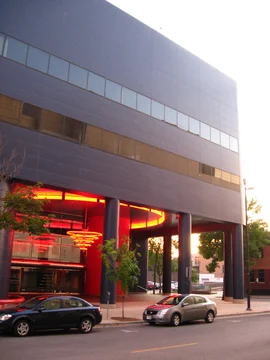
If the Wikipedia photo is correct, it looks like the E.D. Wis. courthouse wins the interesting-exterior-lighting battle.Chris Phan, CC BY 2.0
Yesterday, visiting Judge Barker granted a motion to transfer in MCP IP, LLC v. Velocity Outdoor Inc., C.A. No. 24-683-JCB (D. Del.). The Court's opinion is lengthy and thorough, and it looks like the kind of analysis that is going to be cited quite a bit in future transfer motions.
I won't summarize the whole opinion, but a couple of points stood out to me as worth noting for those who may face (or file) transfer motions in patent cases.
The case was filed in Delaware by a company headquartered in Wisconsin, against a Delaware corporation headquartered in New York. The defendant moved to transfer the case to Wisconsin based (in part) on the fact that the accused products are manufactured there by a subsidiary of the defendant.
The Court applied the Third Circuit's Jumarafactors, which—as we've observed in the past)—can be tough to apply consistently, and can tend to favor transfer in IP cases.
Plaintiff's Forum Preference - This is the factor that consistently favors plaintiff. As the Court here noted, different judges have given this factor differing amounts of weight depending on the defendant's connection to Delaware. Judge Barker decided to give it its full weight despite the fact that the plaintiff here had no connection to Delaware:
[T]he District of Delaware has given the plaintiff’s choice different weight in different cases. In some, it discounted the weight of the plaintiff’s choice where the plaintiff lacked any connection to the forum state. . . . In others, it reasoned that the plaintiff’s connection to the forum has no bearing on the factor. . . . To ensure that plaintiff’s choice of forum is not lightly disturbed and to avoid double counting factors, this court will assume that this factor remains paramount and is not dampened by plaintiff’s lack of connection to Delaware. Cf. Rampart, 2025 WL 227287, at *2 (“Many of the reasons for lessening the importance of a plaintiff ’s choice in forum are subsumed and given weight under [other] Jumara factors . . . .”). Accordingly, this factor weighs strongly against transfer.
MCP IP, LLC v. Velocity Outdoor Inc., C.A. No. 24-683-JCB, at 11 (D. Del. Aug. 19, 2025).
Here are notes from some of the more interesting Jumara factor analyses here:
Whether the Claim Arose Elsewhere - The Court declined to hold that a patent case like this arises everywhere the defendant sells infringing products. It noted that the products are ...
In Vanda Pharms., Inc. v. MSN Pharms., Inc., C.A. No. 24-505-JLH (D. Del. July 31, 2025), the Plaintiff accused various generic drug manufacturers of violating the Lanham by allegedly making false statements in their label and advertisements. In particular, Plaintiff alleged that the Defendants described Plaintiff's product "Hetlioz" as the brand reference for their generic products when "the reference product used in Defendants’ Bioequivalence Study was not actually Hetlioz, or because that study was so flawed that it undermines any assertion that Defendants’ product is bioequivalent to Hetlioz." Id. at 14 (quoting complaint).
This blog is for general informational purposes. It is not an offer to perform legal services, and should not be considered a substitute for legal advice. Nothing in this blog should be construed as forming an attorney-client relationship. If you have legal questions, please consult counsel in your jurisdiction.