A Blog About Intellectual Property Litigation and the District of Delaware


Entries for tag: Sword and Shield

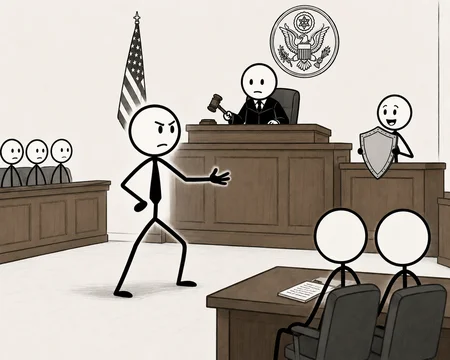
Basically, if it's just a shield and no sword, you're good to go.
Basically, if it's just a shield and no sword, you're good to go. AI-generated, displayed with permission

When it comes to privilege disputes, an argument that the opposing party is "wielding privilege as both a sword" and a shield tends to be pretty effective. But it has its limits. As visiting Judge Murphy found in a decision last month, the opposing party actually has to be doing something more than simply using privilege as a shield.

In A.L.M. Holding Co. v. Zydex Industries Private Ltd., C.A. No. 25-155 (D. Del.), the defendant asserted an equitable estoppel defense to patent infringement, arguing that it reasonably relied on plaintiff's conduct, which misled them to believe that they …

An AI rendering of an object that is both a sword and a shield. I can't argue with it.
An AI rendering of an object that is both a sword and a shield. I can't argue with it. AI-Generated, displayed with permission

There are certain exclusion arguments that stand out as tending to work more often than others—things like a Rule 702 motion for failure to apportion, a motion to exclude a Doctrine of Equivalents argument offered for the first time in a reply expert report, or a motion to exclude an exhibit not on the exhibit list. It's not that they win every single time, but parties often seem to have an uphill battle against them.

Another argument on that list is "using privilege as a sword and a shield." It's not uncommon for a party to get …

"Gather 'round, fellow developers, while I tell you the age-old tale of how we we have an implied license to Sprint's patents." AI-Generated, displayed with permission

Here's one I haven't seen before. In Sprint Communications Company L.P. v. WideOpenWest, Inc., C.A. No. 18-361-RGA (D. Del.), the defendant apparently sought to admit company "folklore" in support of its implied license defense.

The Court found that this "folklore" was relevant to the implied license defense:

While arguing for its second motion in limine (D.I. 433), Plaintiff Sprint raised the issue of certain privileged communications. . . . Plaintiffs second motion in limine sought to exclude testimony about company "folklore" regarding a right to practice Sprint's patents. Defendants plan to assert the affirmative defense of implied license, supported by this "folklore" testimony from ...

Something is missing here.
Something is missing here. Pawel Czerwinski, Unsplash

A recent privilege decision from Judge Fallon became public this week, after the redactions period expired, and it has some interesting conclusions about communications between patent prosecution and patent litigation counsel.

In Huber Engineered Woods LLC v. Louisiana-Pacific Corp., C.A. No. 19-342-GBW-SRF (D. Del.), the defendant accused infringer brought an inequitable conduct counterclaim, alleging that plaintiff knowingly submitted five false "Substitute Statements in Lieue of Oath or Declaration" to the PTO.

As the Court explains, the defendant apparently relied on testimony from the person who signed the statements, and from the inventors, to allege that they were false:

These Substitute Statements, which were signed by [plaintiff] HEW employee Dave …