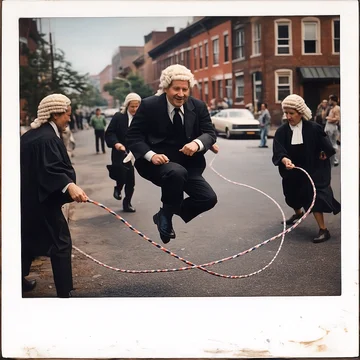
France—the place where these inventors will probably not be deposed.Gloria Villa, Unsplash
Last week in Pierre Fabre Medicament SAS v. Rubicon Research Private Ltd., C.A. No. 24-811-JLH-SRF (D. Del.), Judge Fallon ruled on a set of discovery disputes involving a motion to compel the patentee to make its inventors—who are employees residing in France—available for fact depositions under FRCP 30(b)(1).
In this case, it looks like the accused infringer has a an improper inventorship defense—which sounds like a very good reason to want to depose the inventors.
The interesting thing, to me, is that the patentee tried to fight these depositions at all. The Court easily (and unsurprisingly) batted away each of their objections.
Just a reminder that tomorrow is Veteran's Day, and that the District of Delaware is closed. To the extent you may have deadlines tomorrow that are calculated in days, consider FRCP 6, which states:
(a) Computing Time. The following rules apply in computing any time period specified in these rules, in any local rule or court order, or in any statute that does not specify a method of computing time.
(1) Period Stated in Days or a Longer Unit. . . . include the last day of the period, but if the last day is a . . . legal holiday, the period continues to run until the end of the next day that is not a Saturday, Sunday, or legal holiday. . . .
(3) Inaccessibility of the Clerk's Office. Unless the court orders otherwise, if the clerk's office is inaccessible . . . on the last day for filing under Rule 6(a)(1), then the time for filing is extended to the first accessible day that is not a Saturday, Sunday, or legal holiday . . . .
Of course, this says nothing about deadlines set on a date certain by the parties or the Court. And even though the clerk's office will be closed, CM/ECF should continue to work just fine and does not restrict attorneys from filing things.
Side Note Regarding Court Holidays
Did you know that the Court typically closes for a couple of days each year that are not national holidays (e.g., Christmas Eve, Good Friday, and the day after Thanksgiving)? These show up on the Court's website as "Court Holiday" or "State Holiday." If your firm practices here often, it may be worth calendaring them so you don't forget.
Yesterday, visiting Judge Murphy issued an order resolving discovery disputes in A.L.M. Holding Company v. Zydex Industries Private Limited, C.A. No. 25-255-JFM (D. Del.).
The patentee had served a very broad interrogatory:
For each Accused Product, describe all research, development, testing, and manufacturing performed from January 1, 2013 to the present, including by identifying any dates, locations, persons involved along with their roles, the results of any testing, and any Documents (by Bates number) You contend provide evidence of any of the foregoing.
D.I. 117, Ex. F at 20. The accused infringer's response was just objections and a lengthy list of documents under FRCP 33(d). Id. at 21-28.
As a young lad, analytical chemistry was my jam. I liked big cool machines with lasers and flames. I liked dissolving things in acid. I liked anything that gave off a swirly gas when heated.
For that reason, I have a special empathy for the plaintiffs in Harmony Biosciences, LLC v. Lupin Ltd., C.A. No. 23-1286-JLH-SRF (D. Del. Oct. 27, 2025), and their poor, overworked experts.
The patent there was for a specific crystalline form of a drug. Typically, you would figure out this form via X-ray diffraction (XRD), which involves shooting X-rays at a crystal (typically powdered) from different angles. Via science too involved to get into here, you get a series …
As we laid out in Friday's post, there was a hearing today in Rein Tech, Inc. v. Mueller Systems, LLC, C.A. No. 18-1683-MN (D. Del.) regarding another potential protective order violation. The defendant in Rein alleged that the inventor (who has seen AEO information) has continued to prosecute another patent application in the same field, despite the prosecution bar in the Court's protective order.
Update on Today's Hearing
The Court opened the hearing today by announcing that it intended to grant the defendant's SJ motion of non-infringement. Shortly thereafter, counsel for the patentee informed the Court that the patentee is now willing to …
Just a quick update: The potentially interesting Rein Tech hearing we flagged on Monday is now set to begin at 2pm today, rather than 4:30pm, and it will now be in Courtroom 4B.
Summary Judgment and Daubert briefs are often sprawling, slothful beasts. They shift from issue to issue lodging complaints both specific and general over the course of many pages and exhibits.
Accordingly, it can be hard parse which arguments are actually being pressed and require a response.
Today's case is a sobering reminder of the consequences of missing one.
The plaintiff's opening Daubert brief in Magnolia Med. Techs., Inc. v. Kurin, Inc., C.A. No. 24-1124-CFC, consisted of 18 pages complaining about how the defendant's invalidity report was "devoid of any analysis or detail and fails at baseline to even map the prior art to the claim elements or explain what combination or modification of the prior art …
[Update: The hearing below has moved to 2:00pm today in Courtroom 4B (not 4A)]
Fireworks, n., "a display of temper or intense conflict" (per Merriam-Webster.com)Moritz Mentges, Unsplash
Over the summer, we postedtwice about an interesting hearing in Rein Tech, Inc. v. Mueller Systems, LLC, C.A. No. 18-1683-MN (D. Del.).
In the first post, we discussed how the Court sanctioned a party for misusing information that was designated under a protective order. In the second, we talked about how the defendant cleverly used PDF metadata to help show that the protective order violation took place.
Since then, the case has continued moving forward towards trial. It is set for a pretrial conference on …
Last week, Judge Bryson ruled on a motion in limine where an accused infringer sought to strike the patentee's alleged "new theory" of validity just before trial or, in the alternative, for a permission to raise a new claim construction regarding that theory.
The Court ultimately denied the motion in limine because the accused infringer was on notice of the theory, but granted its alternative motion for permission to raise a new claim construction position regarding the theory, citing O2 Micro.
The Accused Infringer Was On Notice of the Issue
The Court easily denied the motion to strike, finding seven different ways that the accused infringer either was or should have been aware of the …
It can take quite a while to resolve summary judgment motions. In essentially every patent case they take up hundreds of pages of briefing accompanied by hundreds more pages of declarations, reports, and exhibits on the most arcane technical matters.
For this reason, all of our Article III judges' form scheduling orders (except Judge Andrews) explicitly instruct the parties to leave 3 or 4 months (3 for Judge Connolly, 4 for the remainder) between the close of briefing and the pretrial conference.
Because a modern patent trial tends to involve a great deal of back and forth on exhibit lists, designations, statements of facts, etc., the pretrial order is usually prepared -- or …
This blog is for general informational purposes. It is not an offer to perform legal services, and should not be considered a substitute for legal advice. Nothing in this blog should be construed as forming an attorney-client relationship. If you have legal questions, please consult counsel in your jurisdiction.