A Blog About Intellectual Property Litigation and the District of Delaware


Entries for date: May 2026

I'm currently at the
I'm currently at the "remember how fun it was to go outside?" stage. Heike Trautmann, Unsplash

When it comes to things like writing a blog, having hobbies, or "seeing any one of your six kids for more than five minutes," big federal court trials can be rough.

Nate and I are deep in the weeds preparing for multiple trials in the next two months. I don't want to shut the blog down entirely for that long, but we also can't realistically maintain our typical roughly-one-post-per-day cadence. So we're going to try something new: sporadic posting mode. Until we're on the other side, we'll have fewer posts each week, but we will still aim to keep the blog going with the most critical and interesting items that come up. Wish us luck!
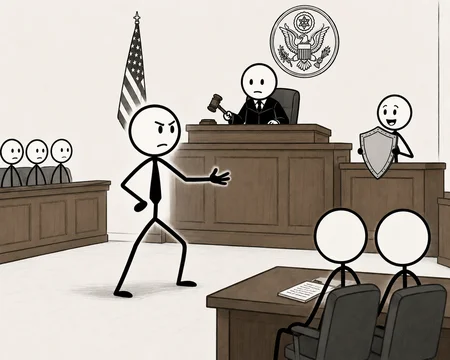

Basically, if it's just a shield and no sword, you're good to go.
Basically, if it's just a shield and no sword, you're good to go. AI-generated, displayed with permission

When it comes to privilege disputes, an argument that the opposing party is "wielding privilege as both a sword" and a shield tends to be pretty effective. But it has its limits. As visiting Judge Murphy found in a decision last month, the opposing party actually has to be doing something more than simply using privilege as a shield.

In A.L.M. Holding Co. v. Zydex Industries Private Ltd., C.A. No. 25-155 (D. Del.), the defendant asserted an equitable estoppel defense to patent infringement, arguing that it reasonably relied on plaintiff's conduct, which misled them to believe that they …

This is where we hide the prior art.
Stefan Steinbauer, Unsplash

On Friday, visiting Judge Choe-Groves issued an order addressing a defendant's use of new references in a motivation-to-combine analysis, which it had not disclosed in its invalidity contentions or on the deadline for election of prior art references. It instead disclosed the references for the first time in its expert report on invalidity.

The case involved a scheduling order using Chief Judge Connolly's form, which includes a single round of invalidity contentions and a deadline for election of references, and specifically requires good cause to supplement.

Judge Choe-Groves found that the late disclosure of certain "background" references was acceptable, but rejected the idea that references used in a motivation-to-combine analysis fall into that category:

The Court …

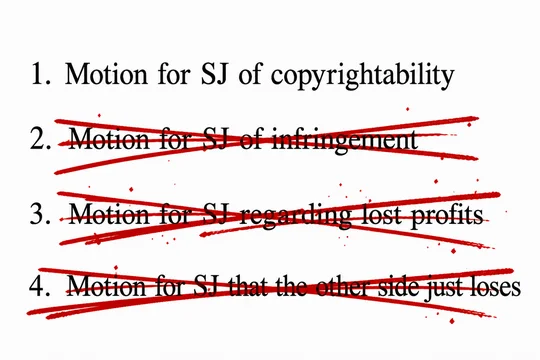
If only we'd ranked the 4th one higher...
If only we'd ranked the 4th one higher... AI-generated, displayed with permission

Chief Judge Connolly updated his form non-patent scheduling order today.

If, like me, you're wondering what changed: worry not! We did a comparison. The main change, other than minor wording and formatting revisions, is that his procedures for ranking summary judgment and Daubert motions now apply to non-patent cases.

This makes sense—we see plenty of rather large and heavily-litigated competitor cases that are not patent cases here in D. Del., including copyright and trade secret cases. These can involve multiple summary judgment motions just like patent actions.

Interestingly, Chief Judge Connolly did not import the page limits for summary judgment motions into his non-patent scheduling order. In …