With Andrew and Nate still at sleep-away camp, I thought I would venture into the blogosphere one more time. Thanks to Andrew and Nate for the opportunity.
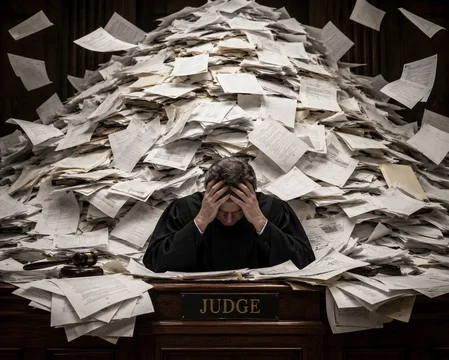
As Delaware counsel working in collaboration with another firm, we are regularly asked for our input, and in particular, asked to review written submissions. It is not uncommon (and is much appreciated) to receive a draft of a written submission well in advance of the due date, and our comments are always given due consideration even if not adopted (or at least that is my experience). One thing that we probably do not focus on enough is the exhibits that will accompany that written submission. We may spend hours reviewing a brief, suggesting revisions and adding transcript cites from the 1990s, but we rarely see the exhibits much in advance of the filing deadline. Then, just before the deadline, we are hit with the exhibit avalanche. With the help of our ever-faithful associates, paralegals, and legal assistants, we manage to file at 4:58 PM and get the service email out at 4:59 PM. All is good in the world…or is it? The answer depends on how we filed the exhibits and the preferences of the Judge presiding over that particular case.
Last week, Judge Noreika issued a new Standing Order (here) requiring that all exhibits filed in Her Honor’s cases be “grouped together into one PDF for filing. To the extent a single PDF is too large for filing, the exhibits shall be grouped into as few PDFs as possible.” Our paralegal team grinned when they saw the Standing Order, because combining exhibits into a single file makes for much smoother uploading on CM/ECF.
Judge Noreika’s recent Standing Order reinforces the importance of thinking about exhibits in advance, rather than as an afterthought. Judge Noreika is not alone in expressing Her Honor’s views on the handling of exhibits. Magistrate Judge Burke, for example, has long guided parties on highlighting and excerpting exhibits in His Honor’s “Guidelines for Discovery Disputes” (here). Magistrate Judge Fallon similarly addresses exhibits in Her Honor’s “Discovery Matters – Procedures” (here), which limit parties to 200 pages of exhibits total in the context of discovery disputes, and contrary to Judge Noreika’s recent Standing Order, provides that each “exhibit shall be filed as a separate, individual attachment[.]” I would be remiss in not mentioning District of Delaware Local Rule 37.1 which requires that any discovery-related motion include either a verbatim recitation of the discovery at issue (who has the space for that in a 3-4 page letter brief?) or “attach[] a copy of the actual discovery document which is the subject of the motion.” And last but not least, I will mention Chief Judge Connolly’s form Scheduling Order (here) which requires pinpoint citations in briefing to any exhibits the filing party wishes the Court to consider because, after all, “Judges are not like pigs, hunting for truffles buried in briefs.” (Citing United States v. Dunkel, 927 F.2d 955, 956 (7th Cir. 1991)).
Against this backdrop of differences in preferences, there are so many ways to go wrong, and only one way to go right: make sure you have excellent Delaware counsel who knows each Judge’s individual preferences. Fine, that may be a little self-serving for those of us in the First State, so how about this: know your Judge’s preferences regarding exhibits in advance, draft your submission with those preferences in mind, and think critically in advance about your exhibits. Specifically, consider whether each exhibit is really necessary (do I need to attach D.I. 1 to establish the date I filed the complaint?), whether it can be excerpted, whether it should be highlighted to draw attention to the critical information, and what the final exhibit package should look like. In other words, exhibit aforethought about exhibits.
If you enjoyed this post, consider subscribing to receive free e-mail updates about new posts.
